
Growing a franchise brand is not simply about opening more locations. It is about building the right support systems, selecting mission-aligned owners, developing strong teams, and protecting the culture that made the business successful in the first place.
In a recent episode of Behind the Franchise, Touching Hearts at Home CEO Todd Treml joined host Paul Elling Inger to share lessons from his 35-year franchising career and his approach to leading a purpose-driven senior home care franchise into its next stage of growth.
| Timestamp | Topic | What You’ll Learn |
| 0:00 | Responsible Franchise Growth | Why selecting the right franchise owners is just as important as opening new locations. |
| 0:53 | Todd Treml’s Franchise Journey | How 35 years in franchising shaped Todd’s leadership approach. |
| 2:22 | Taking the Lead of a Legacy Brand | What Todd focused on when stepping into an established, family-owned franchise system. |
| 4:23 | The First 60 Days: Listen Before You Lead | Why Todd personally spoke with every franchise owner before moving into change. |
| 7:08 | Communication Solves Problems | Why picking up the phone can strengthen franchisee trust and improve outcomes. |
| 8:25 | Growing Without Breaking Culture | How a care-first culture can support growth instead of competing with it. |
| 10:47 | Building the Right Franchise Support System | The committees, coaching, and operational investments behind stronger local businesses. |
| 13:18 | Differentiating in Senior Home Care | Why excellence, focus, family ownership, and Caregiver quality matter. |
| 16:24 | The Caregiver Retention Challenge | How fast response, flexibility, training, and recognition support a stronger workforce. |
| 19:16 | Leading With a Full Franchise Perspective | Why experience across operations, training, marketing, finance, and development matters. |
| 22:16 | Growth Exposes Gaps | How leaders can prepare their systems before expansion reveals weaknesses. |
| 25:04 | Selecting the Right Franchise Owners | Why responsible growth begins with mission alignment and meaningful franchisee selection. |
| 26:29 | Advice for Emerging Franchisors | Todd’s guidance for leaders building toward 100 locations and beyond. |
[0:00] Todd Treml
Making sure that we grow responsibly is a big thing for us. Every franchise company will say, “We want to put the right people in place. We want to select the right people.” We do, too. But it is important that we match people with this business, that the selection process is meaningful, and that we bring in entrepreneurs who understand the mission of the business, are qualified to do it, and can see the vision of the organization.
[0:28] Paul Ehlinger
Hey, everybody, and welcome back to another episode of Behind the Franchise. As always, I’m your host, Paul Ehlinger, and today we’re joined by Todd Treml of Touching Hearts at Home, coming out of Minnesota. Todd, thank you for being on the show today.
[0:40] Todd Treml
Thanks for having me. I appreciate it.
[0:42] Paul Ehlinger
Absolutely. For those who may or may not know who you are, Todd, I know you’ve had a long career in franchising and have been all around it. Who are you, where have you been, and how did you get to where you are today?
[0:53] Todd Treml
I have dedicated my career to franchising, which has been a wonderful journey for me. I got my first experience in franchising with a company called Winmark Corporation. It is a franchise platform of five retail brands. I was able to grow up with that organization from literally a couple of locations to 1,200. I saw amazing scale and growth in tremendous growth industries, and I learned a number of great lessons along the way. I’ve been in franchising for 35 years. Today, I am the CEO of Touching Hearts at Home, a senior home care franchise headquartered in Minnesota, with 84 locations throughout the United States and growing. All along the way, I’ve had some great experiences in franchising and worked with wonderful companies.
[1:55] Paul Ehlinger
That’s awesome. You stepped into Touching Hearts about 18 months ago, or about a year and a half ago. It is a brand that has been around for about 20 years, and you’re stepping in as CEO. My career has been about starting companies from zero to one, so it feels natural to lead them. What is it like coming into an established brand with a track record, where you are the new guy on the block even though you are vastly experienced in franchising?
[2:22] Todd Treml
Good question. I have been involved with startups, and I have been involved with organizations such as United Franchise Group and Lift Brands, where we had thousands of locations. It is very different. When you enter a legacy brand that has been around, in this case, for 18 years, the first thing I determined was not to break the culture. Renae Peterson, our founder, built Touching Hearts on compassion and integrity. The other thing I loved was the franchisee-centric business model. My approach to franchising and business has always been a franchisee-first mindset, and that was already here. That is not always common in franchising. I saw a real strength in non-medical home care, so that was not something we were going to change. It is a business model that works day in and day out. I also saw an incredible group of legacy owners who had been in business for literally 17 or 18 years, and that is truly the strongest asset of this organization. Those were easy things for me to adopt because they are part of my culture and franchise journey. I came into the company to help the organization get to the next level, fulfill Renae’s mission and Andrew and Ryan Lungstrom’s vision for growth throughout the United States, and build a world-class support structure around it. It has been a lot of fun these first 18 months.
[4:02] Paul Ehlinger
I’m always curious when someone new steps in. There are many philosophies: the listening tour, picking one big thing, or choosing three things to fix. What were your first 90 days like? Which approach did you take as you came into the brand?
[4:23] Todd Treml
Naturally, I gravitated first to listening. During the first 60 days, I spoke personally with every franchisee. I got on the phone for an hour to an hour and a half with no agenda. I listened and learned. That is fundamental in franchising when you want to run a good organization. I wanted to hear what was working, what was not working, where they felt supported, and where they did not. The second piece was working closely with the franchise advisory board. I wanted this leadership group among the franchise owners to understand why I was coming into the company and to serve as a sounding board. We are in partnership together. We will do things and strategize together. We do not run a top-down organization; we run it side by side with owners. I wanted to take the pulse of the network and review the priorities. The last thing was that I hit the road. Since I have been here, I have visited about 25 offices. There is no better way to connect with owners and understand what their needs are and how the business operates. I came from outside senior home care, so I had to build knowledge quickly. Of course, I also reviewed unit economics and the company support structure. What I purposely did not do was rush into change. I did not start creating vision statements in my first 30 days. How can you have a vision for something you do not yet know? You have to earn credibility and trust. That all comes along, and it has been a wonderful 18 months.
[6:26] Paul Ehlinger
That is super interesting. I love the idea of getting on the road. We do that with all our customers. Especially in such a digital world, people communicate differently through a computer. When you can get in person, go out for a meal, or spend time together, you learn how people communicate. In my opinion, that is the core of every business transaction: being able to actually say the words and do the thing. People are different. They think about your business model differently and operate within it differently. You have to know how they will communicate with you in good times, bad times, and mediocre times.
[7:08] Todd Treml
Good communication solves lots of problems. Whether you are getting face to face with an owner or communicating with owners by email, I always tell my team: when an email dialogue starts to get complicated, pick up the phone. Use that as a tool to solve problems or create opportunities, whatever the case may be. That transparency in communication - making sure franchisees understand that you care, that you are here to support them, and that you are listening - goes a long way. It is the right way to run an organization.
[7:46] Paul Ehlinger
You mentioned that the culture of the organization was a big reason you wanted to step in. With compassion, care, and caregiving at the center, how do you maintain that culture while still pushing growth? You did not come in not to grow. How do you say, “It may feel different. Something may break along the way, and we will fix it, because we are going to grow,” while still maintaining the culture that made the organization what it is today?
[8:25] Todd Treml
You can look at it a couple of ways. Often, we think about growth in terms of unit growth: stacking locations. When I came into the company, we had 64 locations and had not awarded a franchise in three years. We came in with a goal of applying things I had done successfully in the past, putting the right people in place, and we awarded 20 franchises last year. How does that relate to the current owners? Are we growing too fast? Are our priorities in the wrong place? If you surround your system with support and do not outgrow your support systems, you can grow responsibly. While we were growing, I doubled the size of this team. We need to take care of the entire organization, and we do not get anywhere without existing owners being happy, satisfied, and validating the concept. They wanted us to grow. One thing I heard repeatedly in my calls was, “We need to grow this brand.” We talk about growth and honoring home care and caregiving. That does not compete with growth, in my opinion. Growth at the unit level is about giving great care. Great care drives the economics. Caregivers who feel respected stay longer, and that helps the business. Clients who trust us stay longer. Ultimately, franchise owners will support and invest more in the brand. There is growth on all sides of this business.
[10:11] Paul Ehlinger
What you are describing is long-term strategic thinking. You are not just putting numbers on the board; you are making the brand robust. If a unit is strong, the brand is strong. Having led and worked with so many other brands, every brand is unique, even though some paradigms work across all of them. When you came into Touching Hearts, what did you see as the two or three areas where you could make the greatest impact and advance the brand over the next few years?
[10:47] Todd Treml
There were really good fundamentals in place when I came in, along with a committed, small-but-mighty team and a family dynamic that has been absolutely fabulous. I hit the ground running on a few things that could launch us into more growth - and more importantly, growth at the unit level. First, we had to establish a communication system with our owners. They had to trust and believe in what we were doing and know they were part of it the whole time. I put committees in place. We had an advisory board, and I put in place a marketing committee and a technology task force. Now we are working directly with owners. Second, we needed to build an operational system. We had an operations manual and certain systems, but we did not have people to coach those systems. A document that nobody uses is just a document. We built an entire franchise business coach organization, systems, and training team. We are doing monthly coaching calls and onboarding new franchisees. That support is now in place for owners. The other thing was restarting franchise development. It had been sitting still and stagnant. We had to put good people, a good development process, and new office locations in place. We had to decide who we want to sell this franchise to, where we are going, and what our goals are. We awarded 20 last year, and we will double that number this year. Those were opportunities I saw right out of the gate.
[12:35] Paul Ehlinger
You have to be confident that you can perform the job you say you are going to do. Having fundamentals you can actually move the needle on is important. Caregiving is a massive and growing industry in America. There is competition, but I do not think there is market saturation. As you think about Touching Hearts, how are you differentiating the brand? People have options, or sometimes they may not have the education to know all the options. What will differentiate you over the next decade? How are you building that moat?
[13:18] Todd Treml
It was the first thing I thought about when I came into the company - actually, even before I joined it. I get to do two of the greatest things in the world: run a franchise organization with great people and be in a meaningful, purpose-driven business. Often, differentiation is not what you do; it is how you do it. It is having a mindset of excellence at every level of the organization and in the franchisees. We do not try to be everything to everybody. We are in non-medical senior home care, with companion care and personal care, and we are laser-focused on those things. Certainly, there are opportunities for dementia and Alzheimer’s training and care. The big one, though, is caregivers. It is a race to see who recruits and retains the best people, because that organization will ultimately win. That is the order of the day for us. We need sharp operational systems, good people in business, and great people who are passionate about senior care on the caregiver and administrative sides. On the B2B side, or the prospect side, there are more than 50 franchise companies in this space today. It is not like food, but that is a lot of franchises in an industry that is only about 20 to 25 years old. Our strongest points of difference are that we are family-owned and that we have a high-performing network of owners. Ninety percent of those franchise companies are owned by private equity, venture capital, or some other form of outside capital. That is an industry I know because I was a partner in private equity for six years before coming into this role, working with franchise platforms. Our Item 19s are incredibly strong, and our comparable sales over the last 14 or 15 years have been double digits across the board every single year. These franchise owners perform at a high level, and they are very caring. Those are the things I love about the differentiation for our business.
[15:53] Paul Ehlinger
I like that you call out caregivers, because this is such a long-term, in-home relationship with the customer. The labor market is always a challenge for almost every franchise. How do you think about making this a fantastic job for a caregiver? The longer they stay with the company, the more trust you build with customers in the area. I imagine that is central to building sustainability within the company.
[16:23] Todd Treml
Absolutely. The business rises and falls with the quality and quantity of caregivers you have. Our benchmarking studies show that 70% of home care businesses have turned down business because they do not have the labor to support it - meaning caregivers. It starts at the very beginning. If you want to win in that area, you need easy ways for people to apply. You need quick response times, because if they apply to us, they are applying to five other places. You have to be first to market. You have to onboard them the right way. Once they are in your network, of course, you have to pay fairly, and there may be benefits involved as well. You have to offer things you may not have to offer employees in other industries. We do not always get to tell caregivers what their hours are; they tell us. You need to be flexible with hours, because they may have other jobs. We want to be convenient. Once they are in the network, retention is the big challenge, because most turnover happens in the first 90 days. How are we training, acknowledging, and rewarding them? Do we provide a career path? All of those things are very important to retaining caregivers. We do a fantastic job as an organization and through our franchise owners, but it is an ongoing challenge, and it is not going to get any easier as the aging population continues to grow. Everyone in our space deals with this.
[18:19] Paul Ehlinger
Demand will keep rising, and someone will rise above to meet it. Over the next 10 or 20 years, if you can have the highest-quality supply of caregivers, you will win, period. I was looking over your history, and you have played roles in many different parts of a franchise organization. I imagine that helps when you become the CEO of a franchise. Some people are marketers their whole career, others are in operations or franchise development their whole career, and you can often tell that in how they lead. Do you see your broad experience as a strength?
[19:16] Todd Treml
One hundred percent. It has been by design and pretty intentional. When I got into franchising, I did not know a thing about it. My first career job was literally while I was in college. There were two or three Play It Again Sports locations. The ownership decided to franchise the business, and we began opening more than 100 locations a year. It became the fastest-growing sporting goods franchise in the world. We added Once Upon a Child, Plato’s Closet, Style Encore, and Music Go Round - all of these resale retail concepts. They continued to flourish. We took the company public, and I was part of the early management team involved in all of that. I continued there for more than 20 years in a director role, overseeing merchandising, operations, training, and marketing. When you grow up in a company like that, you wear a lot of hats. When I moved on to my next franchise role, I spent some time consulting with Lift Brands and then went directly into franchise development. I had never been involved in the sale of a franchise in my life, other than perhaps being someone at a discovery day. I found out that I was good at it and liked it. I then moved on to United Franchise Group, where I was an executive vice president overseeing development and operations, again honing those skills. I had great mentors along the way. You cannot do it alone, and I am grateful for that. That led to the past seven or eight years of leading companies and being able to see every side of the business: training, operations, technology, marketing, and finance. Being able not to be biased toward one area is important. Wearing every hat in an organization is important when you lead, because I lead from the front. That is my style, and I love it. It works.
[21:34] Paul Ehlinger
You have been at organizations that range vastly in size. As you progress through your career, do you feel yourself gravitating toward a smaller organization versus a larger one? Do you think you will go back to a large organization someday? How has your mindset shifted as you have progressed through your career?
[21:56] Todd Treml
My total focus is on this company. One reason Andrew and Ryan Lungstrom invited me to join as CEO is that I have seen scale. I have been the scale player in many industries and have seen what it takes. Growth exposes gaps. Understanding what we are going to come up against in the organization is important. What does it mean to the franchise system? How do you avoid outgrowing your support systems? What does it look like when you get to 100 locations, which we will get to this year, and then 200 or 300? We have ambitious goals. This company is going to get to more than 300 locations. Having been there before - and actually at a much larger scale - I can help predict some of the things we will run up against and mentor and coach the team to get there.
[22:51] Paul Ehlinger
My previous company was a big learning experience for us. We went from zero to $20 million in top-line revenue in 18 months and hired 95 people in a year. It becomes a different game once you get there. You see what is coming. How do you manage overbuilding? As you go through these growth stages, having staff who feel the urgency and are willing to wear different hats can be powerful. Those people can become your future vice presidents and directors. How do you balance that hunger and some of the pain people have to feel in a growing team against putting guardrails in place too early and potentially stifling development?
[23:49] Todd Treml
Companies evolve as they start to grow. Usually, when you get to 50 to 100 locations, your organization begins to shift from being more of an operating system to more of a support system. First and foremost, everybody has to embrace the vision of the company. We just finished our five-year vision planning. When everybody is excited about it and the role they will play, it makes it easier every day when you come into the office and try to figure out how you are going to make franchisees better. That is critically important. The other shift is that when you are a small, family-owned business with a handful of employees, everyone wears all the hats. As you get larger, I compare it to this: everybody is an athlete in the early days, and you transition into specialists as the company grows. We are at that point now. We are beginning to hire specialists, and that only helps our franchise owners. Making sure we grow responsibly is a big thing for us. Every franchise company says, “We just want to put the right people in place. We want to select the right people.” We do, too. But it is important that we match people with this business, that the selection process is meaningful, and that we bring in entrepreneurs who understand the mission of the business, are qualified to do it, and can see the organization’s vision. That is the other side of growth. We are not trying to slow anyone down. Everyone has opportunities, and in a growing company, people at headquarters have great opportunities to grow. New opportunities are created every day.
[25:55] Paul Ehlinger
As we wrap up, this has been a fantastic conversation. I love how you think about building an organization and appreciate you sharing where your mind is as you step in to grow this one. What advice would you give franchisors at the same level - perhaps around 80 units - who are on their first run? Eighty units can feel big, scary, and massive. They may have the same vision but less of a roadmap to get there.
[26:29] Todd Treml
It is an exciting time, because most franchise companies never get beyond 10 locations, quite honestly, and 80% never get beyond 100. You are talking about a small group of people and organizations. First and foremost, understand your mission. Spend the time to put a plan together. You have to collaborate with franchise owners. You cannot go it alone. You have to be disciplined to run a good company, but you also have to work directly with your franchise owners. They will help you get there. They are the single biggest part of it. As you continue to grow, make sure you do not sacrifice support systems for the growth you are going to get. A lot of companies make that mistake. I have been in those companies. We grow, grow, grow, and then look back and ask, “How do we fix this?” Make sure you have a plan. I try to hire ahead of the growth to make sure we are supporting those owners, helping them get into business, and helping them run good businesses at the local level in their communities. I would also say franchisee collaboration and, lastly, hiring talented people. I recruit everybody. I do not place ads. We look for a specific type of person - someone whose culture and mission match ours, who has compassion, is a player, and can come in and help us grow. Hire people who are better and smarter than you. A lot of people say that, but it is really true when you are trying to scale. That would be my advice, Paul.
[28:17] Paul Ehlinger
I love that. Thank you. That is awesome advice for everybody listening. Where can folks find you online, Todd? Where can they find you and the company to learn more?
[28:26] Todd Treml
First of all, touchinghearts.com or touchingheartsfranchise.com. Whether you are at the consumer or client level, visit touchinghearts.com. If you are interested in learning about our franchise opportunity, visit touchingheartsfranchise.com. Personally, you can find me on LinkedIn, Todd Treml. I welcome anybody who wants to touch base. I enjoy mentoring, I do a lot of it right now, and if you have a need for that, reach out.
[28:56] Paul Ehlinger
Beautiful. Todd, thank you again so much for being on the show this morning. We really appreciate you taking the time.
[29:01] Todd Treml
Thank you, Paul, for the time you gave me today. I appreciate it.
[29:04] Paul Ehlinger
Absolutely. For everybody else, I hope you enjoyed the show as much as I did. There were a ton of lessons in here, Todd. I think the experience you have scaling organizations is invaluable to almost everybody in this audience. Thanks for doing it. For everybody, I hope you enjoyed it, and come back for the next one. We will talk to you all soon. See you.
For entrepreneurs looking to build a meaningful business in a growing industry, Touching Hearts at Home offers the opportunity to combine local ownership with a mission centered on compassion, dignity, and quality care.
The brand is seeking growth-minded leaders who are ready to build strong teams, serve their communities, and become part of a franchise system designed to support long-term success.
Learn more about the Touching Hearts at Home franchise opportunity: Learn More
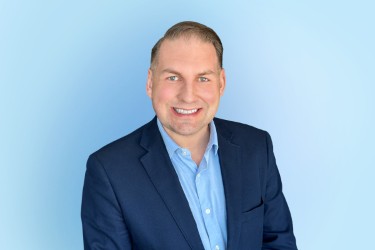
Eric Redden serves as the Director of Franchise Development for Touching Hearts at Home. With years of experience supporting both emerging and established franchise brands, Eric helps entrepreneurs discover meaningful paths to business ownership. He is committed to guiding new franchise owners with clarity, confidence, and heart.