
Building a strong senior care franchise requires more than market demand, technology, or a proven operating system. It requires leaders who understand that growth is ultimately powered by people.
In a recent episode of Fordify Live and The Business Growth Show, Touching Hearts at Home CEO Todd Treml joined business growth strategist Ford Saeks to discuss what sustainable franchise growth looks like in a people-centered industry. Their conversation explored the future of in-home care, caregiver retention, franchisee support, listening-led leadership, technology, and the role of human connection in an increasingly automated world.
In this episode, listeners will learn:
| Timestamp | Topic | What You’ll Hear |
| 0:05 | Franchising Meets Compassion | Why scaling a senior care franchise must be rooted in purpose, consistency, and culture. |
| 1:13 | Inside Touching Hearts at Home | Todd shares the mission behind compassionate, non-medical in-home care. |
| 3:11 | The Future of Senior Care | Why aging in place is reshaping the home care industry and creating a long-term need for quality support. |
| 4:56 | Retention Is the New Recruitment | Todd explains why keeping great Caregivers is one of the most important growth strategies in home care. |
| 8:57 | Understanding the Real Decision-Maker | How local owners can support families, seniors, and other stakeholders through an emotional care decision. |
| 13:49 | Listening and Execution in Franchising | Why the strongest franchise systems do not create every answer at headquarters. |
| 17:37 | Building an Innovation Culture | How franchise owners help test, validate, and shape technology solutions before network-wide rollout. |
| 21:17 | AI Without Losing the Human Touch | Where AI can reduce operational friction while preserving the care experience. |
| 29:12 | Speed to Contact Matters | Why rapid follow-up is essential for both client inquiries and Caregiver applicants. |
| 33:14 | Scaling a Purpose-Driven Brand | Todd’s closing perspective on growing into underserved communities through franchise ownership. |
Introduction
[00:05] Ford Saeks: Franchising meets compassion. Let’s discover how scaling senior care franchises is not just about growth. It is about building purpose, consistency, and culture in a hands-on business that touches lives every single day. Welcome to Fortify Live with your host, Ford Saeks. Joining me today is Todd Treml. He is the CEO of Touching Hearts at Home, a senior care franchise rooted in dignity, compassion, and strong franchise support. Todd, welcome to Fortify Live.
[00:39] Todd Treml: Thank you, Ford. Thanks for having me.
[00:42] Ford Saeks: We were talking a little in the green room. Tell our listeners about Touching Hearts at Home. This is live right now on Facebook, LinkedIn, YouTube, and a few other places, and the audio becomes the Business Growth Show podcast. Todd Treml—T-R-E-M-L—is the CEO. You can find him online at touchinghearts.com. Todd, I gave that part of the introduction, but now tell our listeners what you do and your role.
Touching Hearts at Home Overview
[01:13] Todd Treml: Let’s start with Touching Hearts at Home. We are a national franchise in senior home care. Today, we have about 80 locations across 24 states. We are in the non-medical senior home care business, with franchise owners throughout the U.S. performing very important, compassionate work. They hire key people—caregivers—to go into homes and help seniors age in place, bringing compassion and dignity while allowing them to maintain independence in their lives. Caregivers come to them, all from a non-medical standpoint.
That is Touching Hearts at Home. We were founded in 2006, so we are in year 19 of the business. I came on board as CEO 14 months ago, and it has been an absolute joy working with this organization.
[02:14] Ford Saeks: Full disclosure: I am keynoting your conference, so that is going to be exciting. I cannot wait. One reason I wanted you on Fortify Live is that we have listeners who are franchisees, franchisors, private equity groups, investors, entrepreneurs, and business owners. Every business has a challenge. Your market is growing, but there is also disruption in the marketplace. Not everyone understands their options, and senior care is a very personal experience. As a brand—and as a premium care-at-home provider—how do you navigate that conversation with families?
Future of Home Healthcare
[03:11] Todd Treml: It starts with educating the client and the client’s family about their options. If we go back a number of years, senior home care was not necessarily available. For people who were aging, the option was often a nursing home, assisted living, memory care, or potentially hospice. Today, roughly 90% of aging adults want to age in place at home. That created a community of businesses called home care agencies.
We are giving seniors an option to be at home, where their memories are, whether that means two or four hours a day or a 24/7 situation. There is a lot of education involved. Where I see the disruption is that the future of health care is home care. That is where it is going. If we can continue to meet the demand created by this aging population—the “silver tsunami”—we are looking at approximately 10,000 people turning 65 every day. There is projected to be 20 to 25 years of steady growth in senior home care. We have a big job in front of us: educating the population and making sure we can provide the right kind of compassionate care through our caregivers.
[04:56] Ford Saeks: The local franchisee has a couple of different challenges. They are always trying to attract new clients and build community relationships, but at the same time, they have to find caregivers. You have a strict vetting process because they are working with people in their homes. How do you help franchisees wear both hats—building relationships in the community while leading a strong workforce and keeping everyone to a standard? Staffing is an issue across every industry.
Importance of Employee Retention
[05:34] Todd Treml: It really is. You do not have a business without one or the other. You have clients and caregivers, and hopefully you have enough of both to meet the demand we discussed earlier. In our industry, retention is the new recruitment. We have to work consistently on retention, which is hard work. It comes with building the right culture, creating pathways to upward mobility for caregivers who want that, offering more training, and showing them appreciation every day.
We want to keep retention rates as high as possible because if you are constantly turning people over, it is a hard game. As a franchisor, we give our franchisees a lot of tools to execute sharply, whether recruitment tools or referral marketing, digital marketing, and content that help attract clients. Those two things go hand in hand. We need both. But I believe the winners in senior care will be those who drive a culture of retention and can keep their best people.
[06:59] Ford Saeks: As a keynote speaker, I have a program called Winning Workplace Strategies. I find that small business owners do not always know the difference between culture, leadership, management, team building, communication, and change. As owners wear multiple hats, they are trying to deal with all of those challenges.
One thing I like about being a third-party keynote speaker is that I can reinforce the things you are already telling them, so they use your tools. In franchising, two of the biggest challenges are that the franchisor creates great tools, materials, methodologies, and systems, and the franchisee invests in those systems—but then asks, “What have you done for me lately? Why are you not doing more national advertising? Why are you not driving more business?” The successful franchisees are the ones who embrace the system, follow the system, and use the feedback loops. They do not have to reinvent the wheel.
Your service is built on trust and relationships. In senior care, the decision can involve the person receiving care, their family members, close associates, or whoever is responsible for them. The messages have to change. How do you help your franchisees understand that the client may not be the buyer or the influencer making that decision?
Understanding the Decision-Making Process
[09:02] Todd Treml: In most cases, it is a sibling or another family member helping to make that decision. It is something we train and teach. It starts at the very beginning of the process. Whether we are doing referral marketing or receiving a lead through our website and digital marketing, it is about being responsive. Then it is about having a one-on-one, people-to-people discussion.
We go into the home and have a discussion with all stakeholders—whether it is the client, the family, the caregiver, or a quality assurance person on our side. The message is really important. We can help, but we also need to continue to educate. Usually, those scenarios go very well for us, but getting face-to-face with clients is very important in the decision process.
[10:05] Ford Saeks: I have always found that deals do not happen before dialogue. Especially in something as sensitive as senior care, there are many facets, and families need to understand the intent. I have multiple staff members dealing with aging parents. They are navigating their choices: Who do they use? Do they have someone come in because they are spending all their time caregiving? I tell my team, “Do you not know Touching Hearts?” There are people who can help. The marketplace does not always know what options are available. It is one of those problems people do not know about until they have it—then suddenly they need a solution.
Awareness of Home Care Options
[11:01] Todd Treml: This is what we talk about often. If you talk to any of my franchisees, each one has a story. They were in that spot at one point in time, taking care of a grandparent or a parent. They have a story to tell. It usually begins with the family: the kids are taking care of Mom and Dad, and before they know it, it becomes a full-time job. They need respite, or they need a third party to come in and help because it is best for everybody.
We play a big role in that. We can come in and do so many things. We provide companion care and personal care. These things are really important in taking care of that loved one.
[11:55] Ford Saeks: That is a huge part of it: understanding the differences. I have had 17 different companies, and along the way I had B2B and B2C businesses. When people ask whether you are B2B or B2C, I say it is people-to-people at the end of the day. Sales and marketing are about giving people enough information to make good decisions. It is not hype, manipulation, or tricking them. It is being human.
What I like about your brand is that you bring the human side of senior care into it. Your franchisees are passionate about delivering quality care, and caregivers are trained to a standard. You want to hire slowly, act quickly when someone is not the right fit, train to standards, and use measurements and metrics to evaluate team performance. You have external customers, and you have internal customers. You have to understand their intent.
One of the hardest things for franchisees is understanding different communication styles and how people make decisions. Someone like me may hear, “This is the program,” and say, “Okay, write the check. Handle it.” Someone like my wife is highly educated and likes to read everything. She will ask a lot of questions and want social proof, credibility, and understanding. A franchisee has to recognize that when someone asks a lot of questions, they are not being difficult. That may simply be their decision-making style.
Importance of Listening and Execution
[13:49] Todd Treml: You said it. I have learned a couple of things in the 35 years I have done this. One is the importance of driving a culture of listening and then execution. For franchisors—whether they are emerging or looking to become more effective with franchisees—you have to have a culture of listening. This is not a command-and-control environment. In franchising, it is an influencer model, if anything else.
We have to create relationships. We have to listen. We have to build systems that make sure we are listening to franchisees, collecting their best practices, and pushing those practices back out to the network. We do not sit around the corporate office thinking about the next great idea. That is not what I am going to do. We already have great ideas; they are in the field. We go to the field, listen to our franchisees, use committees, vet ideas, test them, and pilot them. Once there is validation, then we roll something out.
We do not roll things out because we like them. We put them out because we believe they will have an impact and belong in the franchisee’s toolbox. That gives you a much better chance of achieving full execution and implementation. We spend a great deal of time on support and listening. To me, that is the hallmark of our organization, and it is what has driven our business over the last 14 months.
[15:17] Ford Saeks: In my early days, I had a sporting goods company. I invented a bike rack that went floor to ceiling and sandwiched bikes between the floor and ceiling. We sold $50 million of it before I sold the company—gross sales, not profit. Otherwise, I would be on an island in Fiji somewhere.
I remember learning this lesson the hard way when someone asked me, “Ford, are you listening or just waiting for your turn to talk?” They said that, as a good leader, you have to leverage listening. I was a kid from the projects with a ninth-grade education: a critical thinker, problem solver, and go-getter. I did not understand the power of listening in my twenties, and probably not even when I got to my thirties. Now, at 64, I understand it more than I ever used to.
I have seen franchisees who want to help so much that they keep talking. But when leaders empower the essence of listening, it opens the door and makes people feel liked and trusted. It does not matter whether you are in senior care, a service business, or manufacturing: Are you listening to your employees? Do you have feedback loops?
Todd mentioned committees that vet systems, best practices, and lessons learned. At the end of every week, we do a weekly huddle. We celebrate what went right, identify what we fumbled, consider how we recovered, and ask what lesson we learned. Do we need a new SOP or best practice? That lets us create systems so we are not solving the same problem six months later. Successful franchises have a system that gives franchisees a voice without changing things simply because everyone wants something different.
[17:37] Todd Treml: AI is a great example. We get asked all the time: “What are you doing about AI? Where is senior care going? What is the technology play?” Candidly, senior care is catching up. It is catching up to technology and AI. It is trying to figure out its place in what is still a human-to-human business.
For us to sit at headquarters and try to determine what our entire technology and AI strategy should be would not work. The first thing I did was put together a committee of seven franchise owners—an innovation and technology task force. We identified the areas we wanted to focus on, whether CRM, applicant tracking systems, AI, or virtual and remote technologies in the home. Now I have seven people out there passionately exploring and testing products. We could not do that effectively from headquarters alone.
What we can do well is work together with franchisees, codify the information, and push it back out to the network. When it is tested, we can move fast. We like moving fast and making decisions quickly, but not in haste.
Sponsor Message
[19:08] Sponsor Voice: Cannot cut through the online chaos? This episode is powered by Ignite Visibility, the nation’s expert in ROI-driven digital marketing. We help more than 90 leading franchise brands across 2,500 locations outrank competitors and convert more customers. Ready to stand out and grow? Claim your free digital marketing audit at ignitevisibility.com. Ignite your growth.
Power of AI in Business
[19:29] Ford Saeks: We are back. We were talking about the power of listening and technology disrupting everything. The more I speak on AI—and with my new book, AI Alchemy, now out—I see people coming from two different camps. They are either completely overwhelmed by AI and sitting on the sidelines, trying to figure out how it works, or they have played with ChatGPT and become grossly overconfident that they understand it. They used ChatGPT to write an email or review something, so now they think they have AI all figured out.
Then they stop using the human factor. They remove the human touch. AI is a great tool. It is an and, not an or. Use it while keeping the human in the loop. The technology changes quickly, so the mindset must be open-minded, coachable, proactive, and cautious. Do not assume that the results you are getting are correct. If you asked ChatGPT how to make a cake stickier, it might tell you to add glue. That would not be good. I tell people it is like a toaster on autocomplete. Treat it like an intern and monitor it, because it will make mistakes.
[21:10] Todd Treml: Absolutely. A year ago, we came out of technology and AI conferences hearing the message that you could not move fast enough, or you would fall behind and become a dinosaur. What I have learned is that sitting on the sidelines and doing nothing may put you in that position. But if you are engaged, willing to learn, and figuring out how AI applies to your business, that is different.
For our business, it seems to apply mostly in administration and the back end. It can reduce operational friction points and mundane tasks. That is where we will continue to find success using AI. It does not necessarily need to affect the human-to-human experience. If anything, we are reallocating people. On the client side, we ask whether it enhances care. If it does not enhance care, why are we doing it? It gets back to our core values. We have a long way to go in learning about AI, but we are really digging in, and it is a lot of fun.
[22:29] Ford Saeks: I have been a consultant for 30 or 40 years and have spoken in franchising for 34 years. I ran a direct-mail company in the old days. When the internet came along, I moved into digital marketing and digital marketing automation because it was trackable. When AI came out, I went heavily into AI. Many speakers who speak about AI are giving book reports; they talk about the gimmicks and cool things it can do. But how do you apply it?
For franchisees, the lens is different. How do they use AI to expand their influence in local communities? How do they increase the average transaction—meaning, how can they add more value? How can they communicate more clearly with siblings, friends, families, and others involved in the decision? How do they use AI to build relationships with their centers of influence and referral sources? How can they use AI to create introductions, offer value, and create lead magnets or content that nurture referral relationships?
The fourth bucket is operations. It is not about reinventing operations from the finance side or the franchisor side. It is about whether a franchisee understands the dashboard: the cost to acquire a client, the performance of advertising dollars in the community, or the Net Promoter Score of staff members. It is a decision-making tool. In layman’s terms, it is about using AI to make better decisions, see things through the right lens, and save time on redundant tasks so people can spend more time on the human side. Touching Hearts at Home is such a human-based business. AI is not about replacing that or claiming someone’s job will be taken. It will take millions of jobs, but it will also create just as many.
I believe the real currency of the future is human skills: communication and relationship-building. For about a decade, much of the workforce has not developed those skills. They grew up with television, an iPad as a babysitter, and social media. Go to a restaurant and see six people at a table, all on their phones. My crystal ball says the currency of the future will be elevating human skills. People need to build those skills. I would love your perspective.
Currency of the Future in Healthcare
[25:56] Todd Treml: There are a couple of directions I can go with that. As it relates to people skills and new generations, one thing we sometimes forget is that I have four boys, all in their careers right now. Not one of them went to a corporate office to work at the start of their careers. They all worked from home because of COVID. They missed a formative time in their lives to build relationships and really important people skills. They are getting that back now as they are either wanting to, or being required to, return to a corporate setting. That was a big gap, and there is a lot of learning going on there.
When we think about caregivers, we ask: How do we continue to build their skills so they become more valuable to the client? We provide ongoing training. We are launching more dementia training, which is an epidemic all over the world. Can we equip caregivers with dementia training so they are more valuable and can provide better compassionate care? We use tools, resources, and training videos. We improve caregivers’ skills and improve the skills of franchise owners, who can then train their teams. There is a lot of training going on. Human skills are not going away. They are really important.
[27:35] Ford Saeks: I think the essential message is that the human side of business is not going away. A lot of people talk about AI as though it is simply another transition in media or technology. But this is not just technology; it is complete disruption. It is a new species that has landed. It is changing the wheel of excellence in business.
You have operations. You have leadership and management. You have marketing and sales. And you have the customer experience. Those are four big buckets. How do you operate? How do you lead, manage, build a strong team, communicate, and nurture? As you said, retention is the new recruitment. It is always easier to keep and nurture current customers than to go get new ones, and the same applies to staff.
Marketing and sales are about giving people enough information to make good decisions. You do not have to trick, hype, or manipulate. It is about communication. Then you have customer experience—every touchpoint in the business—and speed of response is so important. What are some things you do to help franchisees respond quickly to inquiries?
Importance of Speed in Response
[29:18] Todd Treml: We are building out more automations as we speak. We are testing a CRM that will help us measure the performance of what we are discussing. There is an entire automation tree that takes place when a lead or client inquiry comes in.
First, many of our leads come through referral marketing and the community—hospitals, hospice, physical therapy, skilled nursing, and similar sources. That is a large part of our business and is still human-to-human. But we also receive digital leads, so you have to be strong. Your website needs to perform, rank well, and have great SEO. We are constantly updating that and have made significant investments in that part of the business.
Once a lead comes in, it flows properly into the funnel. We have callback standards, email and text standards, and discussions that happen quickly—usually with the client’s family. We measure every step in the sales process, moving toward an inquiry, home visit, or care consultation. We get into the home, help that individual, and get a caregiver in place quickly. It is a classic sales funnel. The best performers move quickly through it, with strong automation and remarketing as well.
[31:02] Ford Saeks: For anyone who may not know the terms, CRM means customer relationship management. It tracks customers through the journey from a suspect to a prospect to a client or customer to an advocate. How do you move them through that journey?
My takeaway from your use of technology is speed to contact. If someone fills out a form on my website, it goes to my team, but it also texts me because I see text messages more quickly than email. While we were doing this broadcast, a lead came in, and I told my team to text the lead. As a keynote speaker and business growth strategist, I know that once a prospect is on my website filling out a form, the next thing they may do is visit another website. I need to interrupt that pattern. It is the same in senior care, a plumbing company, mosquito repellent, or any other business. Speed matters.
[32:13] Todd Treml: It does not end there, because we treat caregiver applicants the exact same way with speed. They are on Indeed and applying to five different places. If you are the first one to reach them, you have the best chance to win. We use applicant tracking processes and systems, and we focus heavily on speed to the candidate—hopefully the person who becomes a caregiver for us.
Closing Thoughts on Healthcare
[32:43] Ford Saeks: Todd, you have shared great insights. Before you formulate your closing thoughts, I want to remind listeners: Todd Treml, CEO of Touching Hearts at Home, touchinghearts.com. I love that we were able to touch on technology, staffing, relationships, communication, following proven systems rather than reinventing the wheel, and the power of listening. You packed great ideas into this episode. What closing thoughts do you have for our listeners?
[33:14] Todd Treml: This has been really fun. One thing I learned many years ago is that franchising is an amazing way to scale a business concept. We would not be talking about Touching Hearts at Home if it were not a franchise model. We would probably be talking about a single unit that Renee Peterson started back in 1996. She is our founder and absolutely amazing.
We were able to take this concept, build a repeatable business, and scale it to 80 locations—soon to be more than 100, then more than 200, and so on. Two things are most important. First, we have amazing, dedicated, passionate franchise owners in communities every day, serving a need greater than themselves: caring for seniors. That is one of the most important things we do.
Second, we are helping as many seniors as possible. We want to be an avenue for seniors and families in every underserved community going forward. We do not have to be the biggest, but we want to reach as many underserved communities as possible because of the important service we provide.
[34:31] Ford Saeks: That has been amazing. Thank you so much for joining Fortify Live, Todd.
[34:34] Todd Treml: Thank you, Ford. I appreciate it.
Thank You for Tuning In to Fortify Live
[34:36] Ford Saeks: Thanks, everyone, for tuning in to Fortify Live, where we are all about accelerating your business growth. Until next time, keep innovating, keep growing, and keep fortifying your success.
[34:48] Closing Announcement: Thank you for tuning in to Fortify Live. Make sure to like, comment, and share this episode on your favorite social media platform. Do not forget to subscribe to the Business Growth Show podcast, available wherever you get your podcasts. We air weekly at 11:00 a.m. Central Time. Until next week, keep pushing the boundaries and never stop growing.
A successful senior care franchise requires more than an interest in a growing industry. It requires compassion, leadership, a willingness to follow proven systems, and the drive to build a trusted local team.
For entrepreneurs who want to own a business with both purpose and long-term potential, Touching Hearts at Home offers a model designed to support local ownership, meaningful service, and sustainable growth.
Explore the Touching Hearts at Home franchise opportunity and start the conversation today: Learn More
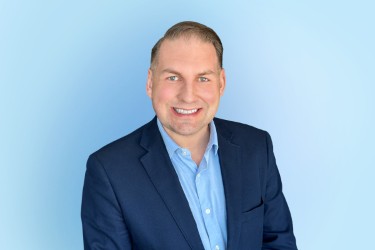
Eric Redden serves as the Director of Franchise Development for Touching Hearts at Home. With years of experience supporting both emerging and established franchise brands, Eric helps entrepreneurs discover meaningful paths to business ownership. He is committed to guiding new franchise owners with clarity, confidence, and heart.