
Franchise growth is not created by unit sales alone. It is built through strong systems, engaged franchise owners, capable teams, clear standards, and leaders who understand that long-term success depends on the people closest to the work.
In a recent episode of the Inspired Stories Podcast, Touching Hearts at Home CEO Todd Treml joined host Anthony Kotaspod to discuss his 30-plus-year franchising career, the mission behind senior home care, and the leadership principles guiding the brand’s continued expansion.
| Timestamp | Topic | What You’ll Hear |
| 0:16 | Introducing Todd Treml | A look at Todd’s role as CEO of Touching Hearts at Home and his background in franchise leadership. |
| 2:10 | Why Franchising Matters | How a proven business model can help entrepreneurs turn business ownership goals into reality. |
| 3:47 | From Two Stores to 1,200 Locations | Todd reflects on helping scale Winmark Corporation and the operational lessons that shaped his career. |
| 6:19 | Why Touching Hearts at Home | What drew Todd to senior home care and a mission-driven franchise network. |
| 8:44 | Differentiation Beyond Services | Why the real difference in home care is not only what a brand offers, but how it delivers care. |
| 10:53 | Recruiting and Retaining Great Caregivers | The role of purpose, recognition, flexibility, training, and career paths in retention. |
| 14:19 | The Franchisee Is the Customer | Why franchisors must treat franchisee success as the foundation of the entire system. |
| 17:18 | Operational Excellence and Support | How training, operations, marketing, technology, and trust can drive stronger franchise performance. |
| 25:03 | Innovation From the Field | Why the best franchise ideas often come directly from local owners. |
| 27:20 | Growth Through Referral Relationships | How community-based referral marketing helps local offices build trust and reach more families. |
| 34:14 | Smart Technology in Home Care | How monitoring technology and AI can help close care gaps while preserving personal connection. |
| 43:19 | Turning Career Setbacks Into Opportunity | Todd’s practical advice for navigating job loss, building new skills, and staying disciplined. |
| 51:23 | A Leadership Lesson From a Difficult Technology Rollout | Why major changes require stakeholder input, testing, and careful execution. |
| 52:13 | The Future of Senior Home Care | Why more families are seeking care options that help loved ones remain at home. |
[00:00] Anthony Codispoti: Welcome to another edition of the Inspired Stories podcast, where leaders share their experiences so we can learn from their successes and be inspired by how they have overcome adversity. Today's guest is Todd Treml, Chief Executive Officer of Touching Hearts at Home.
[00:20] Anthony Codispoti: Founded in 2006 and headquartered in Edina, Minnesota, Touching Hearts at Home provides in-home senior care services centered on dignity and integrity. The organization offers companionship, light housekeeping, meal preparation, and Alzheimer's and dementia care to help seniors and others remain comfortable in their own homes.
[00:47] Anthony Codispoti: Todd has more than 30 years of franchising experience across sales development, operations, and marketing. He has built high-performing teams across multiple brands and holds a Bachelor of Arts in political science and economics from the University of Minnesota.
[01:18] Anthony Codispoti: Before we begin, today's episode is brought to you by AdBacc Benefits Agency, which offers employee benefit programs designed to support teams while improving financial efficiency. To learn whether your company may qualify, visit adbackbenefits.com.
[01:47] Anthony Codispoti: Todd, I appreciate you making the time to share your story today.
[01:53] Todd Treml: Anthony, thank you so much for having me. I appreciate it.
[01:58] Anthony Codispoti: You have had a long career helping franchise brands drive toward success. What is it about this business model that you love so much?
[02:05] Todd Treml: Franchising is a very unique business model in and of itself. It is not really an industry as much as it is a model of distributing a proven operating system and a brand. What I love is the opportunity to help potential and future business owners make their dream come true.
[02:29] Todd Treml: We are part of every aspect of helping them get into business, supporting them, training them, and helping them nurture and grow their business from the day they come in for as long as they want to be in it. It is a very rewarding type of business.
[02:52] Todd Treml: Franchising dominates every industry in America today. It has been wonderful to be part of it and build teams to support business owners. Ultimately, America is built on small business, and franchising is a massive part of it.
[03:11] Anthony Codispoti: Talk about one or two stops along the way where you gained experience and built your track record in franchise development before coming to Touching Hearts at Home.
[03:29] Todd Treml: I have a long history in franchising. It has been a culmination of experiences that I have been fortunate to have. I started my career at a small retailer called Play It Again Sports, when there were only two retail stores. I was part of the early management team that helped expand the retail business and ultimately franchise it.
[04:02] Todd Treml: We built that organization to more than 400 locations. The company is now called Winmark Corporation, and we became a scale player in resale retail. Along with Play It Again Sports, we built Once Upon A Child, Plato's Closet, Style Encore, and Music Go Round. We had five brands, and I was able to be part of the organization's growth the entire way.
[04:27] Todd Treml: I had opportunities to oversee different parts of the operation, including merchandising, operations, training, marketing, and more. It was an incredibly informative and rewarding experience. It taught me what I believe carried my career forward: operational excellence.
[04:54] Todd Treml: When I left Winmark, I had started with two locations, two stores, and one brand. We had grown to five brands, 1,200 locations, and a billion dollars at retail. We also took the company public. Not many people get to experience a startup growing to that level of success.
[05:12] Todd Treml: From there, I wanted to fill in the pieces I had not yet experienced. I had 20 years with one organization, but I wanted to learn more about sales and marketing. I became Director of Franchise Development for Snap Fitness, one of the largest brands in health and wellness. I was also a Vice President at United Franchise Group, where I oversaw operations and development for eight different brands.
[05:56] Todd Treml: I later led multiple brands in a portfolio of experiential concepts. All of those stops along the way led to Touching Hearts at Home, which has been one of the most rewarding things I have ever done.
[06:13] Anthony Codispoti: How did the opportunity to lead Touching Hearts at Home become available, and why did you decide to go for it? It is still franchising, but in a different industry than you had worked in before.
[06:31] Todd Treml: It is different. I have been involved in multiple industries and more than 20 brands, from consumer brands to B2B and B2C. When I was asked to consider becoming CEO, I did not realize how great the opportunity was until I started talking to the franchisees and exploring the industry.
[07:03] Todd Treml: Home care is absolutely booming. The aging population and the opportunity to provide compassionate care to seniors, older adults, and people with disabilities at home make the mission easy to get behind.
[07:16] Todd Treml: When I spoke with the franchisees, I found a very hands-on business. This is not an absentee or executive-model business. Every franchise owner has a story, personal or otherwise, about why they want to be in the business and provide this service in their community.
[07:40] Todd Treml: It is mission-driven and purpose-driven work. I had not seen this level of passion in franchise owners in other brands I had worked with. They are passionate, selfless, hardworking, and have a growth mindset. It aligns with my own core values and with my personal mission of making a positive impact in as many lives as possible.
[08:28] Anthony Codispoti: Changing demographics have made this industry necessary and brought it to the forefront. Other companies offer similar services. What sets Touching Hearts at Home apart?
[08:44] Todd Treml: People can look at the home care industry and say it has been commoditized. Many providers offer companion care, personal care, skilled nursing, Alzheimer's and dementia care, and other service lines. What we do and how we win is not only about what we do; it is about how we do it and why clients choose us over the competition.
[09:24] Todd Treml: We excel in two areas. First, we deliver personalized service at scale. Personalization at scale is very important. Second, we aim to become the employer of choice, because you do not have a client without a caregiver.
[09:37] Todd Treml: Recruiting and retention are critically important. We provide ongoing training, recognition, and career growth. At the end of the day, I am talking about standards. Our standards are the difference maker. We can provide many of the same types of services as others, but I believe we excel in how we carry them out in the marketplace.
[10:07] Anthony Codispoti: In your model, you are serving franchisees, clients, and employees. There is no care to give without a caregiver. What are you doing differently to find and keep good people?
[10:53] Todd Treml: Across our network, we align with mission. A caregiver can work wherever they choose, and there are not enough caregivers in the marketplace to satisfy the full need. There are plenty of options in front of them, so it comes down to how you operate and how you do it best in class.
[11:18] Todd Treml: You need to be competitive with wages, offer a career path, and recognize the work caregivers do. We have had many caregivers move into administrative roles, and caregivers can ultimately become business owners. We want to lay out a career path for them.
[11:48] Todd Treml: One of the most important things we can do, in any business but particularly this kind of business, is acknowledge people. We need to check in regularly to make sure we are meeting caregivers' needs. Flexibility in scheduling is also important to them.
[12:13] Todd Treml: Caregivers can make similar wages in many places. What they often want is purpose-driven work, alignment with the company they work for, and flexibility in hours. Recruitment and retention are so important to us.
[12:57] Anthony Codispoti: How are you using technology to enhance this work?
[13:02] Todd Treml: The marketplace is trying to understand how technology works within a very human-to-human business. We have caregivers, clients, franchisees, administrative staff, and a franchisor. It is a people business.
[13:20] Todd Treml: Smart home devices, AI, and remote monitoring are beginning to play a greater role. These technologies can help fill gaps when a caregiver is not in the home and can help families stay connected to their loved one.
[13:45] Todd Treml: We look at anything technology can do to enhance care. The key is to embrace technology and improve care, but never replace the human touch. That is critically important. Technology also helps with how we recruit, attract, train, and value caregivers, all connected to our culture and mission.
[14:19] Anthony Codispoti: Let's talk about another group you serve: the franchisees. Is it right to think of them as a client you are serving?
[14:31] Todd Treml: I am grateful for the mentors I have had, and I use one of the taglines from a close mentor: the franchisee is the customer. Ultimately, when they succeed, we succeed. There is no scenario where a franchisee fails or does not do well while the home office does great.
[15:00] Todd Treml: We are in an interdependent relationship with our franchisees. We bring people into the franchise, give them the rights to license the brand, train them on a proven operating model, and provide ongoing support. It is our responsibility and obligation to make sure they receive the support they need to succeed.
[15:39] Todd Treml: Unlike a traditional corporation with the CEO at the top of the organizational chart, we flip the chart. The franchisee is at the top, and we are at the bottom supporting and serving their success. It is not a command-and-control environment. It is an influencer strategy designed to help franchisees serve their communities.
[16:10] Todd Treml: How do we help them succeed? How do we help them be profitable? How do we help with marketing? Those are the things they need. When they are successful, we are successful, too.
[16:16] Anthony Codispoti: How have you brought the operational excellence you learned at Play It Again Sports and Winmark into Touching Hearts at Home?
[17:18] Todd Treml: The most important lesson is that if you put your energy into supporting franchisees, every day you walk into the building focused on one thing: How do I make my franchisees better today? You need to avoid distractions that pull focus away from franchisee support.
[17:56] Todd Treml: If we put resources into training, operations, marketing, technology, and sales support, and we grow franchisees successfully, we are ultimately rewarded with good franchise development. Great companies with strong franchise performance earn organic leads and generate interest in the brand.
[18:43] Todd Treml: When you enter a company, you listen, learn, and collaborate with franchisees. Those things are most important. You must have trust and a working relationship between franchisee and franchisor. If franchisees believe you are giving them everything you have and supporting them, you have a strong relationship to grow from.
[19:20] Anthony Codispoti: What has your own journey into the CEO role been like?
[19:50] Todd Treml: There are no shortcuts. It has taken hard work and persistence. You have to walk on a lot of glass and have a lot of experiences. I have continued to add to my skill set and learn from the experiences along the way.
[20:35] Todd Treml: In franchising, it can get messy. You are dealing with many franchise owners, each with needs. You have to navigate adversity, chaos, and relationships. You also have to build the right teams, because it is not a one-person show. People may point to the CEO, but the reality is that it is the team doing important work with franchisees who serve their communities.
[21:36] Anthony Codispoti: Franchisees are business owners with their own ideas and personalities. How do you keep them aligned with the master brand while allowing them to contribute?
[22:13] Todd Treml: You have a wide array of personalities and experiences coming into franchising. In many cases, someone is owning their first business. Some come from professional or management backgrounds. Others are true entrepreneurs who want to move quickly.
[22:59] Todd Treml: What is important is that we have a proven operating system. We ask franchisees to follow that model and stay on course. That is what they invested in. We are not asking them to be robots, but they need to follow the model for the first couple of years, understand the business, and then share opportunities or new ideas with us.
[23:33] Todd Treml: The best ideas always come from franchisees. But we do not yield on the foundation of the business model. When franchisees go off track, it can lead to problems. That brings us back to trust and alignment around the mission.
[24:04] Anthony Codispoti: A simple example is McDonald's. Customers expect the same hamburger, fries, and milkshake wherever they go. You want service to be consistent, but you also want franchisees to share good ideas. Can you give a specific example?
[25:03] Todd Treml: There are literally hundreds. As a franchisor, we are not a group of geniuses who sit around all day creating ideas to improve the network. That is why we invest so much in support and stay in constant communication with franchisees. I have worked with more than 5,000 franchisees across different brands and industries, and when you are connected, you hear best practices and ideas.
[25:42] Todd Treml: Our job is to listen, learn, evaluate an idea, and when it is working in one or more locations, bring it back, package it, and push it out to the network. Instead of one or two franchisees benefiting from the idea, the whole network can. That is franchising in a nutshell.
[26:08] Todd Treml: One recent example came from our advisory board, a group of seven highly committed franchisees who represent the network. They wanted an Owner Forum: an opportunity for franchisees to speak to the network each month on a topic they choose. We implemented it. Now, each month, a franchisee leads a peer-to-peer discussion. We also implement software, technology, and many marketing ideas that come from the field.
[27:08] Anthony Codispoti: What growth strategies have been most successful for you?
[27:15] Todd Treml: There are company-level growth strategies and individual unit growth strategies. I begin with the franchisee, because that is most important. One of the biggest strategies is how we market the business through referral marketing.
[27:47] Todd Treml: We build community relationships with hospitals, skilled nursing facilities, rehab centers, hospice organizations, and discharge planners. We provide an at-home solution for the client. It is community-based and highly effective because it builds on trust and often shortens the sales cycle.
[28:13] Todd Treml: It is also cost-effective compared with relying exclusively on digital lead generation. Referral marketing is not uncommon in home care, but the difference is how you do it and the relationships you build.
[28:41] Todd Treml: At the franchisor level, growing the number of units is hard work. Most franchise companies never reach 100 locations. We have white space in front of us and want to expand into more underserved communities. To do that, we need a strong sales process, great people, and effective lead generation.
[29:35] Todd Treml: We do invest in lead generation, but the best leads are organic. They come from people who see the success of our franchise owners and want to be part of the brand. That is the inflection point in franchising: a customer, client, or community member sees the opportunity and says, "I want to be part of this."
[30:24] Anthony Codispoti: How can someone learn about the opportunity and determine whether their market is available?
[30:41] Todd Treml: The best place is touchinghearts.com. It includes information for family members looking for care, as well as information for people interested in becoming a franchise owner. It explains the process, investment, opportunity, and available territories. People can fill out a form, and we get back to them the same day.
[31:24] Todd Treml: In franchising, we like to say we do not sell; we award. We are looking for people in the right markets with the right intentions who are financially and operationally qualified and who can share in the mission.
[31:44] Anthony Codispoti: Beyond financial capability, what makes someone a good fit from a personality or experience perspective?
[32:05] Todd Treml: We look at the basics. Are they operationally qualified? Do they have experience in business management, managing people, or leading departments? Are they financially qualified? We do not want to put someone in business who does not have the financial wherewithal to succeed.
[32:28] Todd Treml: We do not require home care or healthcare experience. We will train owners on every aspect of running the business. But we need people to understand the job they are going to do day to day. This is not an absentee franchise. They must be willing to do the work and follow the operating system.
[33:24] Todd Treml: Finally, they need passion. It is rare for a candidate to come in without a story about a parent, grandparent, or loved one who dealt with healthcare or home care needs. That is often why they come to us. We want people who have that passion and are prepared to stay focused on the model.
[34:03] Anthony Codispoti: Are there any new technology or service projects you are working on that are especially exciting?
[34:14] Todd Treml: The technology side is very interesting. It seems like we get a new technology or service enhancement every week. We are also doing great things on the marketing side and across social media.
[34:36] Todd Treml: One item we are looking at is a non-invasive monitoring system. The client wears a bracelet that helps measure certain information, and the family can see it as well. It can monitor things such as sleep, wandering, gait, time sitting up, and time walking around. Some biometrics are involved, too.
[35:12] Todd Treml: The purpose is to monitor the client and fill gaps when no one is there. We provide 24/7 and live-in care, but technology like this helps fill the gaps when a caregiver is not present.
[35:33] Anthony Codispoti: So it can alert someone if a person may have wandered outside, if there are memory-care concerns, or if there are changes in walking that could indicate a fall risk?
[35:51] Todd Treml: Exactly. That is what it does. These technologies are practical, but our job is not to jump at every shiny object. We vet them properly, always through the franchisees first. This technology is in place now, and we will have a larger rollout as we move forward.
[36:39] Anthony Codispoti: Tell us about a serious challenge you have overcome, personally or professionally. What did you learn?
[36:50] Todd Treml: On a personal level, about 20 years ago, I lost my brother and best friend. He was my only brother. We were young to middle-aged adults, and it had a profound impact on me. It was tragic.
[37:28] Todd Treml: I am grateful for the time I had with him because I learned so much about gratitude and relationship-building from him. That stays with me every day. With any personal challenge or traumatic experience, you must consider how you will deal with it and what the after-effect will be.
[37:55] Todd Treml: For me, it was about getting balance in my life and making sure that my physical, mental, emotional, and spiritual life were all working. I focused on keeping myself healthy. That experience shaped who I am today.
[38:30] Todd Treml: Professionally, I learned that losing a job is not the end. It can be the beginning of an incredible opportunity for growth. You develop diverse experiences and relationships that help you grow. I always tell people: if you get downsized or lose a job, congratulations - you just got promoted. Get ready for the next opportunity, because it is coming.
[39:51] Anthony Codispoti: I am sorry to hear about your brother. How did you move from mourning that loss to a place of gratitude?
[40:38] Todd Treml: It starts with being self-aware: where you are mentally, emotionally, and spiritually. The most important thing I did was to attack it. You can come out of a difficult time in one of two ways: you can keep struggling and get worse, or you can grow out of it. I chose to grow.
[41:09] Todd Treml: I surrounded myself with as many positive influences as possible. I reached out to people, found mentors, and did whatever I could to get support. People are out there to support you, and they will. That support helped me get through difficult times, reset, and become ready for the next challenges.
[41:43] Todd Treml: Gratitude is incredibly important in personal and professional life. It is interesting that this has come full circle: today, I am in a sharing, caring, helping business that supports people who need compassionate care in their homes. They are grateful, and we are grateful to serve them.
[42:24] Anthony Codispoti: What coaching would you give someone who has recently lost a job and is trying to move from the initial shock to a new opportunity?
[43:19] Todd Treml: It can be a big blow to your ego when someone tells you that you have been downsized. But it is not the end; it is the beginning. You have done great work or built value somewhere, so assess the value that you bring and stay open to opportunities.
[43:54] Todd Treml: My first advice is to network and keep networking. When I first did not have a job, I was an adult with a family to feed. I attacked my search every day like it was a job. I got up at the same time, dressed for work, and put in eight hours.
[44:26] Todd Treml: I networked, self-recruited, took classes and courses, read, joined associations, and did everything I could to move forward. I approached it as my full-time job. Within 45 days, I landed in a better spot than I had been in before, and that momentum continued.
[45:42] Anthony Codispoti: What did networking look like for you?
[45:53] Todd Treml: It included connection requests, but more than that, it meant sending emails to my network, friends, former coworkers, people in the industry, suppliers, and customers. It meant joining local groups, getting together with people, attending conferences and workshops, and staying connected to the business.
[46:31] Todd Treml: You may not do exactly what you did in your prior role. I did not. I moved into franchise sales after spending my whole life in operations. I found out I was good at it, and it rounded out my experience. That made me more valuable to organizations because I had worn more hats.
[47:43] Todd Treml: The key is that you have actually done the work. You have opened locations, consulted franchisees, built marketing programs, sold franchises, and understood the financial side of the business. When you come into a CEO role with that experience, you can bring more value than someone who has only done one or two things.
[48:27] Anthony Codispoti: What daily practices help keep you centered and on track?
[48:36] Todd Treml: Habits can be a great thing, good or bad. Every day, I have a real belief in the power of prayer. On my commute, I thank God for the blessings in my life and ask for guidance, wisdom, and strength in the decisions I make as CEO.
[49:07] Todd Treml: I pray for clarity in decisions, the ability to lead with integrity, and the opportunity to make a positive impact in the lives of those I serve in business and professional life. That is an important daily ritual for me.
[49:29] Todd Treml: From a business standpoint, I plan every day, hold staff meetings, and keep disciplined rituals and plans. At the same time, I try to remain creative. There is a balance between creativity and discipline.
[50:08] Anthony Codispoti: Can you think of a big mistake that felt difficult at the time but became a valuable turning point?
[50:40] Todd Treml: At my last company, we had a portfolio of franchise brands in the experiential economy. I decided to convert our software system to a new platform. It promised better technology, faster speed to market, improved analytics, and lower cost. It looked like a slam dunk.
[51:04] Todd Treml: Although it worked out in the end, the conversion was very rough. There was a lot of criticism, second-guessing, and pushback from franchisees. I learned that when you make a big decision affecting many people, you need to bring in all stakeholders, stress-test the product thoroughly, get buy-in, and then execute.
[51:46] Todd Treml: We went too fast, and I made the decision to go too fast. But you need the discipline and willingness to make mistakes, own them, and fix them.
[52:05] Anthony Codispoti: What is something you wish more people knew about your industry?
[52:13] Todd Treml: Home care will be the future of healthcare. More seniors will age at home, and healthcare systems are going to rely on us to help keep people out of hospitals. Numerous surveys show that 90% of seniors want to age in place at home, and many people do not know that.
[52:35] Todd Treml: Touching Hearts at Home franchisees provide those services at a very high level in their communities. That is why we are so driven to expand into underserved markets. The aging population is often called the silver tsunami. The statistics are extraordinary. Our industry is growing, vibrant, and doing important work.
[53:10] Anthony Codispoti: I saw this in my own family with my grandmother. She strongly wanted to stay at home because that was where her memories were, where she was comfortable, and where she knew the layout. The ability to have a trusted person come into the home and help was invaluable.
[54:07] Anthony Codispoti: What is the best way for people to connect with you personally or with the Touching Hearts at Home brand?
[54:30] Todd Treml: For the brand, touchinghearts.com is the quickest and easiest route. We are also active on Facebook, Instagram, TikTok, Pinterest, and YouTube. The website will take you where you need to go.
[55:03] Todd Treml: Personally, people can find me on LinkedIn. You can message me anytime. I spend time each month mentoring and speaking with other CEOs and emerging leaders. I enjoy it immensely. I believe that givers gain, and I also continue to network and learn from others.
[55:49] Anthony Codispoti: For listeners on the go: search for Todd Treml - T-O-D-D, T-R-E-M-L - and Touching Hearts on LinkedIn.
[56:07] Anthony Codispoti: As you look to the future, what exciting changes do you see coming in your industry, and how can people prepare to be part of that story?
[56:19] Todd Treml: I see two major things. First, technology is going to enhance care. Smart home devices, AI, and monitoring will help keep families, caregivers, and clients connected. We are only at the beginning stages of that.
[56:45] Todd Treml: Second, caregivers will ultimately drive the success of the business. The best agencies will attract them, train them, and place real value on them. The future is about investing in people, not only process. Culture matters when you are recruiting, retaining, and supporting caregivers. They are a major key to our future success.
[57:12] Anthony Codispoti: Every great organization is only as good as the people who are its foundation. Todd, thank you for sharing your time and your story with us today.
[57:25] Todd Treml: Anthony, I had a blast. Thank you for having me.
[57:31] Anthony Codispoti: That is a wrap on another episode of the Inspired Stories podcast. Thanks for learning with us today.
A senior care franchise is not the right fit for someone looking for a passive investment.
It is an opportunity for hands-on leaders who want to build strong teams, support Caregivers, form meaningful local relationships, and help older adults remain safe and comfortable at home.
Touching Hearts at Home is looking for mission-aligned entrepreneurs who are prepared to follow a proven model, lead with compassion, and build a business that creates lasting community impact.
Learn more about owning a Touching Hearts at Home franchise: Learn More
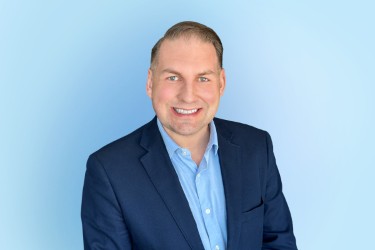
Eric Redden serves as the Director of Franchise Development for Touching Hearts at Home. With years of experience supporting both emerging and established franchise brands, Eric helps entrepreneurs discover meaningful paths to business ownership. He is committed to guiding new franchise owners with clarity, confidence, and heart.