
For many older adults, home is more than a place to live. It is where routines feel familiar, memories are held, and connections to family, friends, and community remain close.
In a recent episode of Live Healthy Longer with Dr. Jim, Touching Hearts at Home CEO Todd Treml joined Dr. Jim Polakoff to discuss the growing desire to age in place, the role compassionate in-home care can play, and why senior home care continues to be a meaningful opportunity for families, Caregivers, and entrepreneurs.
| Timestamp | Topic | What You’ll Hear |
| 0:50 | Why Independent Living Matters | Dr. Jim introduces the desire many adults have to remain in their own homes as they age. |
| 2:04 | Meet Todd Treml and Touching Hearts at Home | Todd shares the mission behind compassionate, flexible senior home care. |
| 2:55 | The Origins of Touching Hearts at Home | How founder Renee Peterson turned a personal vision for senior care into a franchise model. |
| 4:17 | What Aging in Place Really Means | Why home represents familiarity, control, routines, and connection. |
| 6:38 | Companion Care and Personal Care | A practical look at the non-medical support that can help seniors live at home. |
| 8:08 | Supporting Daily Routines and Meals | How Caregivers help clients maintain preferred routines, food choices, and independence. |
| 9:57 | Transportation and Everyday Errands | Why dependable transportation can preserve freedom and reduce stress. |
| 12:20 | Companionship and Reducing Isolation | How meaningful conversation, activities, and connection can brighten daily life. |
| 14:51 | Dementia Care and Family Respite | The specialized support available for clients living with dementia and the families who love them. |
| 16:23 | Choosing the Right Caregivers | Why compassion, empathy, reliability, and communication matter as much as qualifications. |
| 19:17 | Flexible Care Plans and Payment Options | How care can be tailored around a client’s needs, schedule, and available resources. |
| 22:12 | The Senior Care Franchise Opportunity | Why home care is a growing, purpose-driven industry for prospective franchise owners. |
| 24:30 | Training, Support, and Marketing Resources | How franchisees are equipped to build and operate successful local care businesses. |
[0:00] [Music]
[0:06] Narrator: Welcome to Live Healthy Longer with Dr. Jim. Since many of our listeners are Generation Xers and Baby Boomers, we realize the ability to continue living at home as you get older is an important topic—one we will cover in this episode.
This podcast is presented in part by Amazon Books. Their slogan is 'Everything from A to Z.' Dr. Jim will have some reading recommendations at the conclusion of this episode.
[0:42] Narrator: Now, here is our host: health care specialist, author, and popular podcaster, Dr. Jim Polakof.
[0:50] Dr. Jim Polakof: Yes, this is Dr. Jim Polakof. If you're in your 50s or 60s, you might wonder what lies ahead as you age—or you may already be at that stage and concerned about living independently in your own home. You might be open to downsizing, but living in a facility for older adults is likely not on your bucket list.
AARP recently conducted a study that found 75 percent of older adults want to continue living in their single-family homes. However, as we age, our health often takes a toll. According to the National Council on Aging, nearly 95 percent of adults age 60 and older have at least one chronic health condition, while some 80 percent have two or more.
Heart disease, cancer, and diabetes can sneak up on us, and dementias such as Alzheimer's are often not far behind. So, is moving into an assisted living facility unavoidable, or is there a way to affordably remain independent in your own home?
I have answers for you, because my guest for this episode is a leading expert in the field of independent living. Todd Treml is the Chief Executive Officer of Touching Hearts at Home. His company is known for its compassion and offers an array of home care services for seniors—from a few hours a day to around-the-clock care when needed.
Todd, welcome to Live Healthy Longer.
[2:30] Todd Treml: Jim, thank you for having me today. I appreciate it.
[2:34] Dr. Jim Polakof: It is our pleasure. This is a very important subject for a good portion of our audience. I understand your home care company has more than 60 franchise locations throughout America and is on its way to expanding to all 50 states, which is impressive.
Let's begin by talking about the origins of Touching Hearts at Home. I believe your founder, Renee Peterson, had a personal motivation to help older adults live independently.
[3:06] Todd Treml: Jim, that's correct. What many people do not know is that Renee, before entering home care, owned two Merry Maids franchises. She fell in love with the franchise model and with proven operating systems.
She started a business called Caring Companions in 1996 after recognizing the need among seniors who wanted to age in place and live compassionate, fulfilling lives at home. As the aging population continued to grow, she ran that business for 10 years. Then, in 2006, she changed the name to Touching Hearts at Home and began franchising the model.
[3:54] Dr. Jim Polakof: I like that name, Touching Hearts at Home. It has a poignant feel to it.
[4:00] Todd Treml: It is a wonderful name, and we love it. We have now successfully franchised the model for the past 18 years, and we have nearly 70 locations.
[4:12] Dr. Jim Polakof: You are growing very quickly. Let's talk about the term 'independent.' It has something of a sacred connotation. There is a famous quotation that says, 'Freedom is the will to be responsible for ourselves.'
Even though we are social creatures by nature, as I mentioned in my opening, 75 percent of older adults prefer to live independently in their own homes. In your opinion, Todd, does this desire to remain free have roots in that need?
[4:54] Todd Treml: Very much so. A large percentage of our aging population wants exactly what you described: to age in place, live at home, and avoid moving into a facility.
Independent living, or aging in place, means remaining in a familiar and comfortable place. It means staying connected to family and the communities they have known for most of their lives. It gives people a sense of control, which is vitally important. It also avoids disrupting day-to-day routines. Their memories are in their home.
If we can give them an opportunity and an avenue to age in place, live at home, and receive care, I believe everybody wins.
[5:52] Dr. Jim Polakof: As I understand it, care can be provided on a limited basis—perhaps a few hours a day—or, if necessary, 24 hours around the clock. Regardless of the individual situation, you can provide the care needed for the time needed.
[6:10] Todd Treml: Absolutely. We provide care for specific hours during the week or day. We have clients who need 24/7, around-the-clock home care, and we also offer live-in care, where caregivers live with the client. There are a variety of service lines and care plans available.
[6:33] Dr. Jim Polakof: As we age, we encounter health issues, which create a need for assistance. Can you discuss the challenges we face as we grow older, particularly when trying to live independently at home? Housekeeping and cleaning, for example, can become increasingly difficult. How does Touching Hearts at Home help seniors address these challenges?
[7:08] Todd Treml: We are primarily a non-medical home care company. The foundation of what we do is companion care. Companion care is broad, but it essentially includes non-hands-on support: friendly conversations, transportation, running errands, and light meal preparation. All of those things are critically important.
We also provide another category of service called personal care. We can help with mobility, medication management support, bathing, toileting, and other needs that are critically important to seniors. We are able to provide all of these services and functions for people living at home.
[8:09] Dr. Jim Polakof: Let's look at meal preparation more closely. I am sure caregivers are not preparing gourmet meals, but for seniors, food preparation can become more laborious as they age. What does this actually mean? Is it helping put together food during the day, or perhaps preparing dinner that someone can simply pull from the refrigerator and microwave later?
[8:40] Todd Treml: Jim, it is all of the above. It starts with understanding the client's needs. When we enter the home and conduct assessments before developing a care plan, we want to understand what foods they enjoy and when they eat.
We can help shop for groceries, bring them in, and prepare the meals clients enjoy—not necessarily meals we think they should eat. That is part of supporting independence. Our caregivers are wonderful at meal preparation. It could be a simple lunch, preparing food for later, or reminding clients to eat at appropriate times during the day. These are all very important.
[9:25] Dr. Jim Polakof: You just touched on something important. Some older adults may forget to eat or may not be eating nutritiously. I assume caregivers can also help with nutritional guidance.
[9:46] Todd Treml: One hundred percent. Our caregivers receive training to adapt to each client's specific needs.
[9:52] Dr. Jim Polakof: You also mentioned transportation. Many of our listeners may remember the Beach Boys song 'I Get Around,' but as aging progresses, getting to medical appointments, shopping, and running errands can all become difficult. Are these part of the caregiver services you provide?
[10:20] Todd Treml: Yes. Touching Hearts at Home provides transportation support and opportunities to run errands. We can take clients to and from doctor's appointments.
When a senior is no longer able to drive, it can be a major loss of independence. Helping people participate in their lives through transportation is very important. It creates a sense of freedom and independence, and transportation-related support is something we provide as a brand.
[11:01] Dr. Jim Polakof: I think it is important to underline that. Many communities have buses that pick up seniors and take them to medical appointments, but seniors may arrive very early, sit around for hours, and then wait several more hours for the return trip. Having somebody drive them in their own car can make a huge difference. I assume that is a transportation feature you offer.
[11:35] Todd Treml: Very much so. You are exactly right. Being able to accommodate clients according to where they are in life, the time of their appointments, and their needs—and being punctual in doing all these things on their behalf—is exactly what we do at Touching Hearts at Home.
[11:53] Dr. Jim Polakof: A recent survey on aging found that one-third of people between the ages of 50 and 80 feel lonely, and nearly as many feel isolated. There is unquestionably a great need for companionship. Can you speak more about that?
[12:27] Todd Treml: Companionship is a core part of what we do. Looking at the non-medical companionship side of the business, we want to get to know our clients. Our caregivers build incredible relationships with them.
When we help seniors deal with loneliness, we are often talking about simple things: friendly conversations, streaming movies together, looking at old photos, helping with meals and preparation, working on crafts and hobbies, or simply spending time together. Seniors may enjoy playing games and cards. It is stimulating, and it helps fill the gap created by loneliness.
We love what we do in this category. It can be life-changing.
[13:31] Dr. Jim Polakof: That is good to know. Loneliness is a growing problem in America, especially among the aging population. When one spouse passes away, the other can be left very lonely. I remember my dad living as a lonely person for 10 years after my mother passed away. We tried to do the best we could, but those can be agonizing times. Having that relationship and companionship can make a big difference.
Another study I read in January 2025 spoke to a more serious issue. It stated that adults age 55 and older have a 42 percent average lifetime risk of developing a dementia such as Alzheimer's. This is higher than we previously thought. It is a difficult challenge, even for a skilled caregiver. Is this something you address as well?
[14:51] Todd Treml: It is, Jim. We recognize the significant need for dementia and Alzheimer's care. It is specialized care, and our caregivers are trained to address the unique needs of dementia clients.
They are trained to provide physical, emotional, and cognitive support. We use positive reinforcement, which is critically important when you are dealing with dementia. Nationally, we use leading resources to train our caregivers, including the work of people such as Teepa Snow.
One other important part of dementia care is support for families. Often, family members are also carrying the responsibility of supporting a loved one with dementia. We offer respite care, which gives family members time to take a breath and take a break. Dementia and Alzheimer's care are critically important parts of what we do.
[16:18] Dr. Jim Polakof: You mentioned that your caregivers are well trained. How do you go about selecting them? I think that is obviously a big question on the minds of many older adults.
[16:36] Todd Treml: There is no service without caregivers. Caregivers are the lifeblood of the business, and they do incredible work. They are purpose-driven people and, in many ways, a lot like the franchisees who operate these businesses.
When we recruit and select caregivers, we do the fundamental things: review applications, conduct background checks, and assess experience levels, background, and skill sets. Beyond that, we look for compassionate people with empathy. Good communication skills, reliability, and punctuality matter. But, above all, caregivers need compassion and empathy for clients. They have to care about the individual and be ready to build relationships.
There are different licensing requirements from state to state, so we also review certifications as needed. But, by and large, it is about the heart. It is about looking at someone as a human being and asking, 'Do you love this? Can you become passionate about the mission of caring for seniors or people with disabilities?'
[18:08] Dr. Jim Polakof: I would imagine caregiving can sometimes be frustrating. With dementia, for example, a senior may express anger while dealing with changes in capacity and health. That has to place a great deal of strain on caregivers. It must require deep compassion.
[18:33] Todd Treml: It really does. I have seen the amazing caregivers in our business—thousands of caregivers across our network. They have huge hearts, incredible patience, and they love what they do. They have embraced it as purpose-driven work, and when we find those individuals, they are absolutely amazing people.
[19:04] Dr. Jim Polakof: Many listeners may be thinking, 'This sounds wonderful, but let's get to the elephant in the room: affordability.' Seniors often face limited-income challenges. Some have substantial savings, but others are getting by on Social Security and a small amount of savings.
I understand you offer different care plans, so there is not a one-size-fits-all model. Can you talk about that?
[19:48] Todd Treml: There are a couple of sides to that. The care plan we develop can be adapted to a person's budget and to the needs of a particular client. It could range from a few hours a day to several hours a week, or more when needed.
In a business like ours, services are primarily private pay. However, we are strong supporters of the VA, which is also a payment source. There are many veterans who need the type of service we provide but may not have access to it because their markets are underserved. We work closely with the VA.
We also work with long-term care plans. Many seniors already have long-term care coverage in place, and we can help them work through those processes. From time to time, franchisees also serve Medicaid clients. There are several options, but our message is that we can be flexible and adapt care plans to the client's needs.
[21:14] Dr. Jim Polakof: I would imagine you can also advise potential clients about other alternatives, such as reverse mortgages. I assume you are equipped to give prospective clients the information they need to make care as affordable as possible.
[21:33] Todd Treml: Yes, sir. Absolutely.
[21:38] Dr. Jim Polakof: Many Baby Boomers and Generation Xers have been able to put away savings and have had relatively strong economic lives. With the idea that 75 percent of older adults want to remain at home, purchasing a franchise could be a terrific investment. Home care is growing quickly. Can you talk a little about your franchise program? Some listeners may be interested in that aspect.
[22:19] Todd Treml: Thank you. I believe franchising is a great business model for someone who wants to go into business, whether they have owned a business before or not. Franchising allows someone to invest in a business while having a proven operating system in place, along with the benefits of buying power, training, support, operational support, and the right to do business under a national brand. Those are significant advantages of joining a good franchise.
Home care specifically is an attractive category because there are very few industries where you can say there is 20 to 30 years of straight growth ahead. The statistics around the aging population are clear. We know how many people turn 65 each day, and that creates a growth trajectory that will not stop for quite some time.
Our particular franchise is also affordable. A high-end investment in our franchise is just under $100,000. It is an office-based or agency-based business, so there are no significant hard assets or inventory to buy. It is not seasonal. Those factors are attractive to people.
Lastly, we have a strong track record. We have been franchising for 18 years, have seen tremendous year-over-year growth, and are seeing strong interest in the opportunity.
[24:06] Dr. Jim Polakof: I assume you provide training for franchisees. Some listeners may say, 'I do not know anything about the home care business. I understand the need for it, but I do not know how I would operate the business.'
[24:30] Todd Treml: The most important thing about investing in a franchise is understanding the support systems. A franchisee is trained on every aspect of running the business. We are with them every step of the way through the training process.
Training is not something we simply did in the past; it is something we continually do. As needs evolve—whether around Alzheimer's, dementia, other care needs, or technology entering the marketplace—we train continuously. Candidates do not need previous experience. They can come in, and we will teach them what they need to know to operate a successful Touching Hearts at Home franchise.
[25:21] Dr. Jim Polakof: As someone who comes from a marketing background, I assume you also provide marketing support.
[25:31] Todd Treml: We do. We like to say we are their marketing department. We provide everything from websites and assistance setting up social media platforms to digital assets for advertising and marketing, seasonal advertising, and much more. We have a large marketing toolbox that franchisees can access, as well as a marketing team at our home office in Minneapolis that they can rely on for ongoing support.
[26:07] Dr. Jim Polakof: To recap, it sounds like this is an affordable investment. You do not need prior experience because of the training program, and you are backed by a strong marketing program. It sounds like a good investment, although I will let listeners decide that for themselves.
Todd, this has been a very enlightening interview. I think you have shed light on questions many people have, and you have helped answer some of them. We have probably only scratched the surface.
For those interested in learning more about Touching Hearts at Home, they can visit the website, which is touchinghearts.com.
[26:42] Todd Treml: Yes, touchinghearts.com. On the family or client side of the website, you can access our locations, find the one nearest you, and learn about services in that market.
We have wonderful franchisees. As a franchisor, we support them, but they are the people in their communities providing incredible, compassionate care.
For those interested in the ownership or franchise-investment side, the website also has links to own a franchise. We would be happy to have further conversations about that as well.
[27:45] Dr. Jim Polakof: Thank you so much for joining us and enlightening us. Remember, that is touchinghearts.com. I will be right back with my essential nutrition tips for aging bodies.
[27:52] Narrator: Touching Hearts at Home offers an array of services for seniors, people living with medical conditions or disabilities, and those transitioning from hospital to home. Learn more about living independently at home and about Touching Hearts at Home by visiting touchinghearts.com.
You can find information and many other podcasts directly on our website, jamespolakof.com.
[28:29] Narrator: Now, let's turn to a great book about enjoying a healthy life as you grow older: Live Healthy Longer with Dr. Jim, written by our own Dr. Jim Polakof.
According to the program, leading experts describe Live Healthy Longer with Dr. Jim as a comprehensive health, wellness, and longevity book. Remember to include 'with Dr. Jim' in the title. You can find it on Amazon and read the reviews.
For cosmetic-surgery readers, The Real You, Only Better is another title mentioned by the program. For readers who enjoy golf and romance, Love in the Pines is also available. You can find these books on Amazon.com and at jamespolakof.com.
[29:39] Dr. Jim Polakof: I once again wish to thank Todd Treml for his enlightening information about aging independently at home. Be sure to check our website for additional information about his company, Touching Hearts at Home.
Now, let's turn to highlights from my nutrition tips. First, we need to embrace the fact that, with aging, our bodies undergo various changes that affect overall health and well-being. The foods we eat become increasingly important.
As we age, metabolism tends to slow down, which is why we must pay close attention to the quality of nutrients we consume. More than ever, we need a balanced diet rich in vitamins, minerals, fiber, and protein to support body functions, help prevent illness, and maintain health.
Aging bodies experience a decrease in muscle mass and bone density, which can lead to a higher risk of falls and fractures. This underlines the importance of consuming adequate protein and calcium-rich foods.
Let's take a look at superfoods. Berries provide strong nutrition because they are high in fiber, vitamin C, and antioxidant flavonoids. Fiber in berries can help keep us regular and protect against disease.
Dark leafy green vegetables—such as kale, arugula, broccoli, and spinach—are also high in fiber. They are heart healthy and can support muscle function.
Instead of the side effects associated with red meat, seafood can be a better choice. Salmon, tuna, and trout can provide needed protein in a healthier form.
One of my favorite superfoods is avocado. A Harvard study found that people who ate at least two servings of avocado each week had a lower risk of developing heart disease.
The list of superfoods goes beyond what I have stated. There is much more to learn about the nutrients that are especially important as we grow older. I suggest reading my latest blog, 'Essential Nutrition Tips for Aging Bodies,' at jamespolakof.com.
[32:28] Dr. Jim Polakof: This is Dr. Jim Polakof, with my sincere thanks for joining me once again. Remember, a new episode of Live Healthy Longer is available every Wednesday. In the meantime, my wishes to you for a healthy, happy, long life.
[32:47] [Music]
For entrepreneurs who want to build a business with purpose, senior home care offers the opportunity to create a meaningful impact close to home.
Touching Hearts at Home is seeking compassionate, growth-minded leaders who want to support seniors, empower families, build strong Caregiver teams, and serve their communities through a trusted home care model.
Learn more about owning a Touching Hearts at Home franchise: Learn More
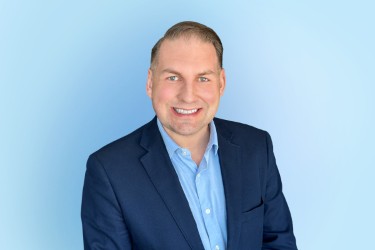
Eric Redden serves as the Director of Franchise Development for Touching Hearts at Home. With years of experience supporting both emerging and established franchise brands, Eric helps entrepreneurs discover meaningful paths to business ownership. He is committed to guiding new franchise owners with clarity, confidence, and heart.